
Count me among the chorus of those cheering for Disney Pixar’s newest film, Hoppers. It’s the best Pixar endeavor in years—an energetic and likable protagonist in Mabel, a memorable storyline, and the kind of comedy that earns its laughs from character and plot rather than from potty humor or knowing adult winks.
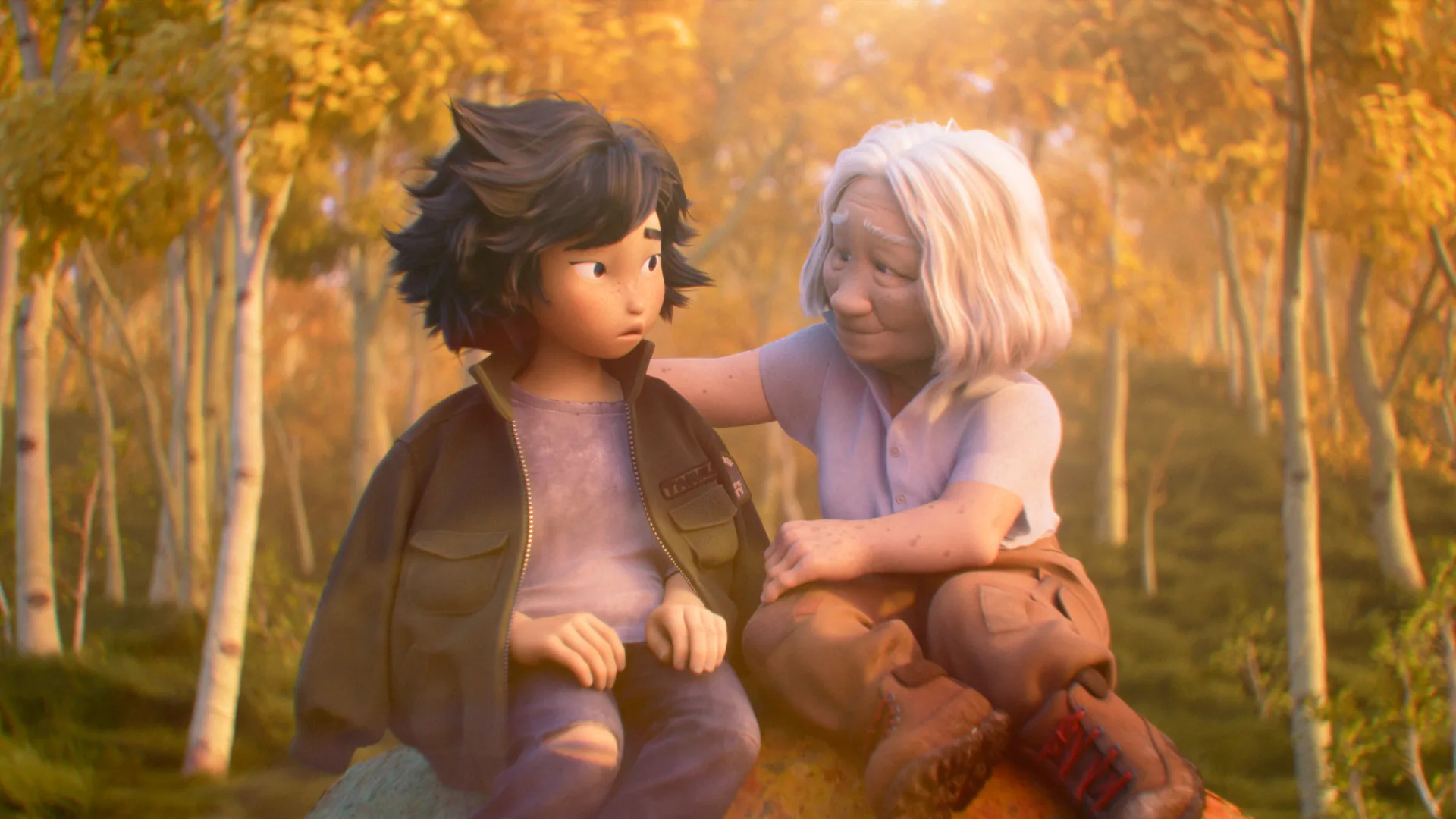
An early scene won me over. A young Mabel sits with her grandmother on a rock just outside a forest glade, and, naturally, she at first resists the whole idea of just . . . sitting there. But after Mabel’s grandmother leads her to be still, the glade begins to awaken. Leaves float through the air, animal life emerges, the sounds of creation become gloriously evident.
In a world of busyness and constant entertainment, Pixar is doing something subversive: reminding us what it looks like to sit still, open your eyes, and truly see again.
We’ve Traded Reality for a Deeper Boredom
In The Body of This Death, Ross McCullough describes our era as one of “diversions” that are “superficially satisfying but profoundly boring.” Reality, he says, is the opposite: superficially boring but profoundly satisfying.
Isn’t that an apt description of our world? We’ve all seen the glazed eyes of a child who has forgotten what it’s like to touch grass, to be present to the real rather than the virtual. But it’s not just kids. Adults, too, are superficially satisfied with distraction yet profoundly bored—untethered from the world in front of us.
The endless scroll, the ever-beckoning notification, the newest arrival on whatever streaming platform we mindlessly open every evening: These are symptoms of an overstimulation that leads not to curiosity and wonder but to acedia and numbness.
The word “boredom” doesn’t appear in ancient languages, surfacing only in the 1600s. (Webster doesn’t track its first known use in English until 1853.) People in earlier eras certainly tired of all the grinding tasks necessary for survival, but they didn’t describe their lives as boring, in part because death felt ever-present and leisure was the privilege of royalty. Nowadays, even those under the poverty line have access to constant entertainment. We all live like kings. And we’re often bored like them too.
Our diversions are, in part, a sign of our hearts’ restlessness. Pascal was right: “If our condition were truly happy we should not need to divert ourselves from thinking about it.” Chronic unhappiness drives us toward whatever removes us from the present, and entire industries now exist not only to satisfy that itch but to inflame it.
The peril of endless diversion is that we begin to feel we’re missing out if we’re not fully up to speed on everything happening. Alec Benjamin’s song “Dopamine Addict” captures the dread of being without a phone, feeling “like [you’re] out of touch,” unable to shake the sense that you “need that crutch,” “need that rush.” In reality, what we’re missing is reality itself. McCullough writes:
When you run from the boredom of reality, the devil gives you a deeper boredom in its place. Put the other way around, to grow tired of our diversions requires returning to the thing that first tired us most of all.
Startling Wetness of Water
Justin Poythress recently wrote about C. S. Lewis and that fine word “quiddity”—which Poythress defines as “the ‘thatness’ of something. Your house is in that neighborhood rather than another. Your spouse is wearing that shirt. You’re sitting in that chair with that view to eat that meal. Notice and appreciate that, instead of sinking into your phone because that isn’t enough.”
This is why, with Lewis, I have such love for G. K. Chesterton and his lifelong astonishment at everyone’s lack of astonishment. “The world will never starve for want of wonders,” he said, “but only for want of wonder.” And, “There are no dreary sights; only dreary sightseers.” In a letter to his fiancée, he wrote,
I do not think there is anyone who takes quite such a fierce pleasure in things being themselves as I do. The startling wetness of water excites and intoxicates me: the fieriness of fire, the steeliness of steel, the unutterable muddiness of mud.
That’s quiddity. Chesterton captures the childlike sense of everything being new. The world remains endlessly fascinating; every discovery can be met with wide-eyed enthusiasm. But that capacity is endangered now. The screen gives children fewer opportunities to skin their knees, fall off a bike, get stung by a bee, or feel the itch of grass after rolling down a hill.
Rebels of the Real
I want to push back against the superficial satisfaction of my diversions and reengage the more profound delight in the world around me.
For more than a year, I’ve been using the Merlin app to identify birds. My heart leaped at the first signs of spring a few weeks ago, when I saw the return of robins hopping across the yard, their melodies merging with the cardinals and wrens, interrupted by the squawk of a grackle. On a teaching trip to Oxford last year, I delighted in the songs of the blackbird, melodies you simply won’t hear in Nashville, a beauty the Beatles captured in the song by that name.
Satan’s goal is to make us more like zombies than humans—unthinking creatures who are also unthanking, empty of the gratitude that should fill us as we look to the Creator and Giver of all good gifts. That’s why I appreciated Hoppers. The film reminds us what it looks like to bask in the beauties and wonders all around us, to be startled by a sunset, alert to the mourning dove, arrested by the majesty of a tree.
As believers, we see this world as charged with grandeur. And so we take our place in the great chorus of praise rising from every corner of creation to the Conductor of the symphony.
If you would like my future articles sent to your email, as well as a curated list of books, podcasts, and helpful links I find online, enter your address.


Comentarios