
Last Monday night, Micheline Nahra lay awake listening to the familiar sound of gunfire and explosions as the latest war between Hezbollah and Israel continued into its second day.
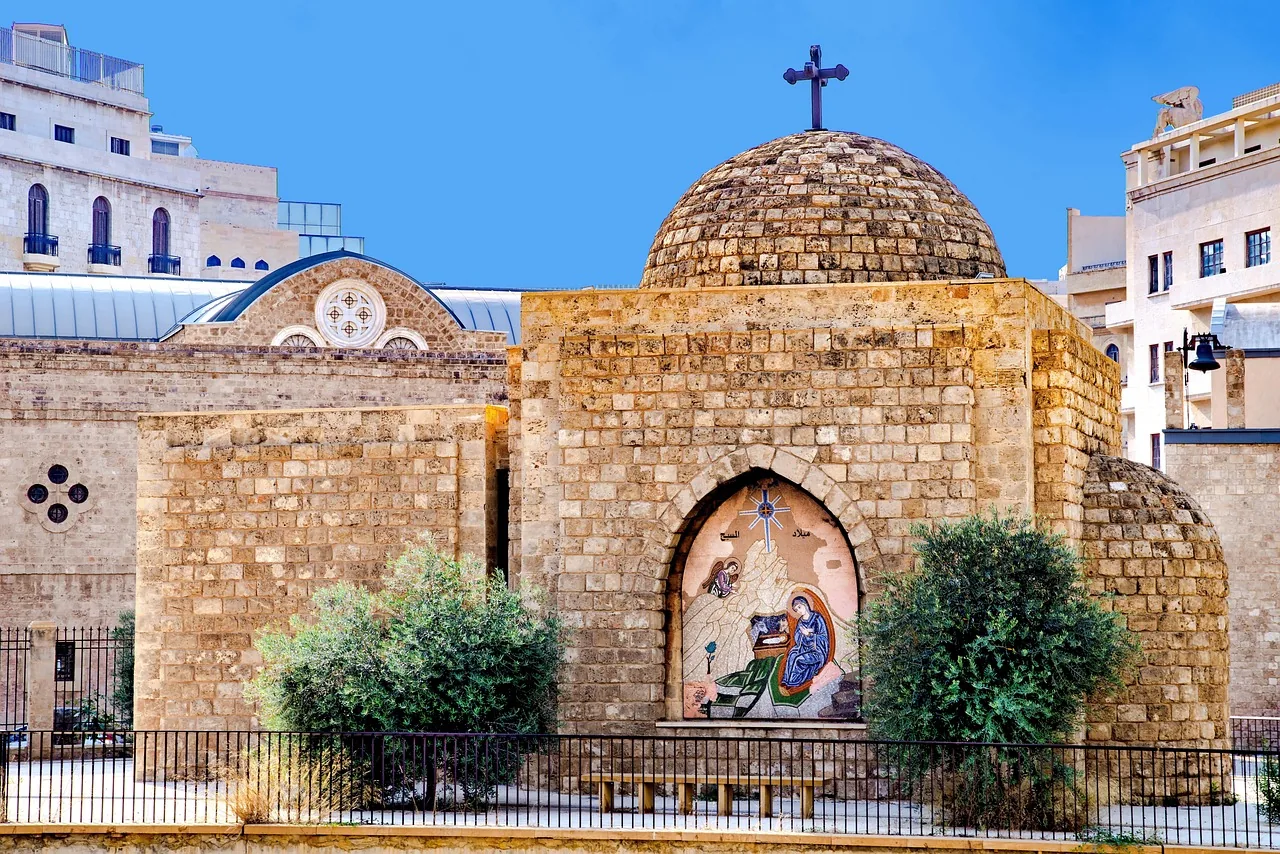
Located just two kilometers from Lebanon’s southern border with Israel, Nahra’s village, Deir Mimas, has been at the front lines of multiple conflicts between the two countries. As a Christian village unaffiliated with Hezbollah, Nahra and other Deir Mimas residents knew their village was not a target of the Israeli strikes, but that reassurance did little to alleviate the fears of the 56-year-old mother. (CT agreed not to use Nahra’s real name due to security concerns.)
The next morning, Nahra called her neighbor across the street to check in on her as she prepared for the arrival of her grandchild. Nahra stood on her balcony, looking out toward her neighbor’s house, which is located next to the home of an Orthodox priest. As the two women talked, an Israeli tank shell suddenly struck the neighbor’s and the priest’s houses.
“I saw the fire and the smoke in front of my eyes,” Nahra said.
Over the phone, she heard her neighbor screaming before she hung up. The neighbor wasn’t harmed, but the priest’s son was injured. Shortly after, the Lebanese Red Cross came and took him to a hospital.
Nahra is not sure why the houses were hit. Nonetheless, it reflected the growing danger facing thousands of Christians in southern Lebanon, where Hezbollah has long had a stronghold. An Israeli strike on the Christian-majority village of Qlayaa, which is near Deir Mimas, killed a Maronite priest Monday.
Since March 2, Hezbollah and Israel have been engaged in a full-scale conflict—their second in less than two years—as part of the wider Middle East war between the US, Israel, and Iran. In Lebanon, the fighting has displaced hundreds of thousands of people, but in the country’s south, many Christians are choosing to stay in their homes despite intense ground fighting, airstrikes, and evacuation orders.
Immediately after the attack in Deir Mimas, Nahra, her husband, and their son packed their belongings and went to stay at her sister-in-law’s home in the center of the village where they believed they would be safer.
It was the fifth time that Nahra had been displaced in her lifetime.
The last time Nahra and her family fled the village was during the 2024 war between Hezbollah and Israel. They relocated to Lebanon’s capital, Beirut. But this time, they are choosing to stay in Deir Mimas due to financial constraints, their attachment to the land, and fear of what could happen to their house if they leave.
During the last war, Israeli troops moved into Deir Mimas and entered people’s homes, including Nahra’s. “They damaged everything,” Nahra said. “They made it dirty. They stole a lot of things from the house. It was horrible.” Other residents in southern Lebanon reported similar accounts, with some homes covered in graffiti.
After a cease-fire agreement in November 2024, the family returned home and repaired what they could.
Choosing to stay, however, is neither easy nor safe. Nahra noted that rockets regularly fly over the village and an interceptor missile fell once on the roof of a home 50 meters away from where they are staying now. The fighting has also cut electricity to the village, forcing residents to rely entirely on generators and solar panels.
In the face of this danger, Nahra is leaning more on her faith and her church.
On Friday night, she gathered with fellow Catholics and Orthodox Christians at Saint Michael Church for a Lent service. Around 40 people attended, including the priest whose home was shelled and his son, who had returned from the hospital. Despite the sound of explosions, Nahra felt a sense of serenity as the congregation prayed and read from the book of Psalms.
Multiple passages touched her deeply, particularly Psalm 91, which speaks of God being a refuge in times of hardship.
“Every time I read it, I feel we are surrounded by God’s power,” Nahra said. “But yesterday in particular, I really felt his embrace.”
Some Christians in South Lebanon have chosen to flee to safer parts of the country, where locals have turned hundreds of public schools and private institutions into makeshift displacement shelters.
With a young infant and two elderly members in his family, Maroun Shammas felt it was not wise for his family to stay in Deir Mimas. Early last week, the pastor of Baptist Church of Deir Mimas made the difficult decision to leave the village.
He and his family first tried to evacuate on Tuesday, but after driving north, road closures caused by the threats of bombings forced them to turn around. The next morning, they made a second attempt. This time they succeeded, but the first stretch of the trip was eerie as the family drove along deserted roads.
After about two hours, they reached a seminary on the outskirts of Beirut that was hosting displaced families from Deir Mimas and other parts of Lebanon. It was the same place Shammas and his family stayed for a few months during the war in 2024.
 Photo by Hunter Williamson
“When we arrived, we had mixed feelings because we felt that once again, we were in a familiar place where we feel safe,” Shammas said. “At the same time, displacement is difficult, because you have to leave your home, the place where you live, the place where your memories are.”
This is the eighth time fighting has displaced Shammas.
“We hope this time will be the last,” he said. “I don’t know what the future holds for us, but we have the same longing to return and start over in the place we love and serve God.”
The day after Shammas and his family arrived at the seminary, his relative Najib Khoury landed at Beirut’s international airport after visiting Switzerland for the birth of his grandchild.
His flight arrived Thursday afternoon, just as Israel issued mass evacuation orders to several neighborhoods near the airport. Under the threat of impending airstrikes, friends of Khoury picked him up and drove him to a relatively safe part of Beirut, where he stayed the night. The next day, he departed to his village, Borj El Moulouk, which is next to Deir Mimas.
People told Khoury he was crazy for going back home, but the pastor of the Marjayoun Evangelical Baptist Church in Borj El Moulouk didn’t want to be anywhere else.
“My heart is here,” he said. “I’m not a hero, but I love this area.”
After arriving in the village on Friday, Khoury led a Bible study with about 25 people at his church. Explosions rang out throughout the meeting, and as Khoury stood at the pulpit, he cried, moved by the hymns that the worship leader had chosen. He said the songs reminded him of a shepherd he saw in Beirut the night he arrived. The shepherd had walked for two days from the southern port city of Tyre to Lebanon’s capital with his goats and planned to walk four more days to reach the country’s eastern Beqaa Valley.
“If a shepherd didn’t accept to leave his herd behind … how could I not be with mine?” Khoury said.
As Khoury spoke with CT over the phone on Saturday, the sound of airstrikes could be heard in the distance. The pastor described two incidents in recent days in which Israeli troops fired warning shots at Christians as they attempted to get their belongings from their homes in evacuated areas. One of those families is now sheltering in the church.
But Khoury also said that this conflict is not as intense as the war in 2024. Back then, Hezbollah had a stronger presence in the area, and Israeli attacks on the group damaged and destroyed the homes of many believers, including Khoury’s.
So far, only a few families in Khoury’s church have fled. One Syrian family returned to Syria, while two others moved to a Christian district further north. But with the church doors now open, they plan to return to Bourj El Moulouk soon.
Like Nahra, Khoury finds strength in Psalm 91, which has been the church’s slogan since an earlier war between Hezbollah and Israel in 2006. He is particularly comforted by verse 7:
“A thousand may fall at your side, ten thousand at your right hand, but it will not come near you.”
“I am clinging to this promise,” Khoury said, “and just yesterday, I was encouraging the church with it.”
Farther south, Christians face an equally precarious situation in the border village of Rmeich. Many of the towns around it lies in ruins, destroyed during the 2024 war and subsequent conflict.
This has left the village isolated as one of the only inhabited villages in the area, according Tony Elias, the Maronite parish priest at Saint Georges Church.
For the time being, the road to Beirut remains open, but it is unclear for how much longer. Elias noted that the village is seeking additional fuel to ensure that it can continue to run the generators that are providing residents with electricity.
Rmeich is one of the dozens of villages that sit within a huge swath of the territory in southern Lebanon to which Israel has issued evacuation warnings. But Elias said local officials and residents have decided not to leave. He said residents fear Rmeich could be used as a staging ground for attacks against Israel if people evacuate their homes.
Those concerns are not without precedent. Two years ago, an Israeli strike against a Hezbollah target destroyed the home of Emanuela Beatrice Tini while she was away from the village. In the blink of an eye, the 54-year-old Romanian expatriate and her husband lost the home they had invested 20 years of work into.
Tini sold her gold to help finance the reconstruction of the home, which she and her husband only finished a few months ago.
“We are very tired of this war,” she said. “We had just gotten out of a war two years ago. We need a break.”
Two days ago, Tini and her husband packed their belongings in preparation for the possibility that Israeli troops force them to leave their homes. The Romanian embassy also urged Tini to leave.
“But where would I go?” she said. Rmeich has been her home for the past few decades. It is also a place where she sees great needs and opportunities for ministry. She serves at her church with administration, cleaning, and cooking. She also loves to visit locals and share the gospel with them.
“God put me in Rmeich to serve him,” she said. “I asked God, ‘Why did you put me in this very difficult place? There’s always a war here.’ But then I understood that God needs me here.”
">Christianity Today.

Comentarios