
The day after the Hamas attacks of October 7, 2023, Elisha Lazarus—a Messianic believer and reservist in the Israel Defense Forces (IDF)—reported to a top-secret base in northern Israel as part of his Iron Dome defense unit.
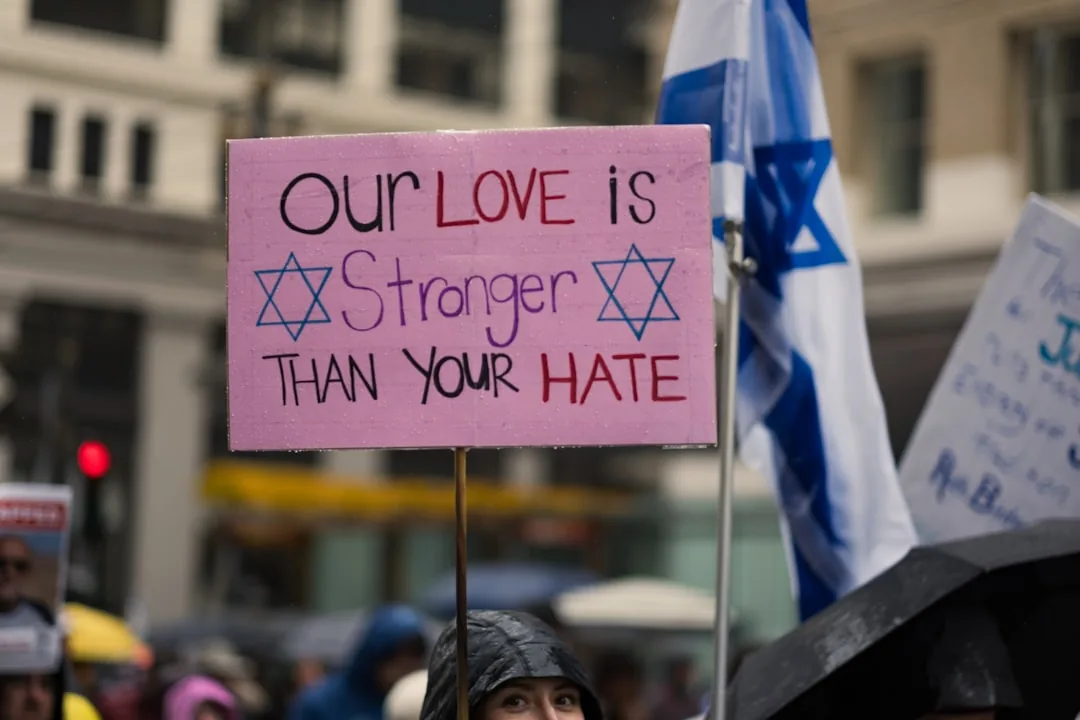
The assault caught the nation by surprise, and many in his unit feared Hezbollah would launch a similar cross-border attack from Lebanon. Lazarus saw IDF helicopters circling above and fled with his unit to a bunker seven floors below ground, carved into a mountain.
There he watched 20 to 25 soldiers line up near a tiny underground synagogue. “All these people that probably haven’t gone in there in the past 20 years—you see them in there praying,” Lazarus told Christianity Today. “There’s a saying: You don’t have any atheists in the foxhole.” Lazarus said that many of the soldiers lined up outside the synagogue acknowledged they were atheists who in that moment felt the need to seek God.
The Hamas attacks exposed vulnerabilities in ways previous wars had not. For decades, Israel protected its citizens by building bomb shelters and missile defense systems. Yet on October 7, the nation failed to protect them, resulting in the deadliest day for Jews since the Holocaust and igniting a multifront war.
In April and October 2024, Tehran fired missiles at Israel in the first direct attacks from Iranian territory. Last year, Israeli strikes targeting Iranian nuclear sites resulted in waves of ballistic missiles toward Israel. And on February 28 of this year, Israel and the United States launched a weekslong campaign to degrade Iran’s military capabilities. As of March 11, two Israeli soldiers have died in the conflict, and 13 Israeli civilians.
This conflict has since evolved into a wider regional confrontation with differing perspectives on a timeline for resolution. As Israelis face an uncertain future, many are open to conversations about faith, according to Christians CT interviewed.
“There is a seeking, because when people lose the sense of control in their lives, and they see that it’s not in their hands and death is even imminent at times, they look for God, and they look for answers,” said Lazarus, who is also a content creator for Jews for Jesus.
Recent studies bear out that conclusion. According to a November poll by the Jewish People Policy Institute, 27 percent of Jewish Israelis have increased their religious observance since the war against Hamas began, with roughly one-third reporting they are praying more frequently. Close to 20 percent are reading Jewish Scriptures more often.
Some Israelis are even exploring Christianity. Aaron Abramson, CEO and executive director of Jews for Jesus, said his staff in Israel has seen increased interest in hearing about Jesus and discipleship in recent years. According to Abramson, last year, the number of people interested in studying the Bible increased by 10 percent compared to the year prior, and 30 percent more people were willing to go deeper spiritually.
Staff members have also observed a steady rise in Israelis professing faith in Christ, including some from ultra-Orthodox backgrounds.
In the year following the October 7 attacks, 25 Israelis accepted Christ through Abramson’s organization. While that number was slightly lower than in previous years, in the war’s second year, professions of faith jumped to 147.
He doesn’t believe it is a mass revival but rather an “open door and steady response.” Rising antisemitism and regional instability have left many Jewish Israelis “anxious and wondering where their help comes from,” he added.
Abramson said pastors across the country report similar patterns and a steady stream of baptisms—three there, six here, five there.
David Zadok, pastor of Grace and Truth Congregation in Kanot, Israel, said 15 people—primarily young adults averaging 24 years old—have come to faith in Christ at his church of approximately 160 people since 2023. All are in discipleship programs and regularly attend church, he noted.
During one of his baptismal classes, he sat between a Jewish soldier from an IDF tank unit and an Israeli Arab of similar age. Two of the 15 new believers are Arab, he noted, bringing the number of Christian Arabs in his church to four.
Zadok believes part of the spiritual openness stems from misplaced trust. For years, Israelis placed their trust in the “chariots and horses” mentioned in Psalm 20:7. “We have put our trust in our Iron Dome, in our military, in our Mossad, and everything else,” he said. “Within two to three hours [of the Hamas massacre], everything we put our hope in was gone,” he added.
Zadok said many soldiers have become more religious in the past year or two due to battlefield experiences that have created a “spiritual hunger.” He recalled one Messianic Jewish soldier whose vehicle overturned in Gaza. His machine gun seemed to be miraculously positioned straight into the ground, holding the vehicle just centimeters away from his chest and saving the soldier from certain death. “He really believed it was a miracle,” Zadok said.
One soldier from his congregation came to faith in Christ after a near-death experience in the wake of the Hamas attacks. Twice, Hamas fired upon his reserve unit while they were positioning with mortars landing less than a football field away. The experience confirmed for him God’s existence and led him to “come to him, surrender, and seek his forgiveness,” he told CT. “I know he protected me before, and if he wills, he will continue to do so. If not, I will simply go to him.”
CT granted the soldier anonymity due to his concerns about ongoing threats to IDF soldiers and their families.
The presence of Christian soldiers serving in various IDF combat units has also contributed to the increased interest in God, Zadok noted. He estimates at least 550 believing soldiers are serving, including his 21-year-old son who is currently stationed in Gaza. Israel has around 170,000 active-duty personnel and close to 450,000 reservists.
Zadok’s church delivers Purim packages to Messianic believers serving in active duty and has partnered with other churches to compile a list of 300 soldiers for future package deliveries. Zadok said approximately the same number of Christians are serving as reservists.
They are often the only believers in their units, Zadok added. That was true during his years as a major in the IDF and has also been the case for his two daughters and his son. Their presence provides opportunities “not just to share the gospel, but to show the gospel and to talk about the hope that they have,” he said.
Christians make up about 2 percent of Israel’s 9.6 million people.
Lazarus said he is the only Christian in his unit, and during his swearing-in ceremony 15 years ago, he was the only soldier out of 200 who asked to take his oath on the New Testament instead of the Tanakh, or Hebrew Bible.
He has encountered one other Messianic Jewish soldier during his tenure in the military, yet he said the IDF is accepting of other faiths and traditions. For example, last summer Israel began drafting ultra-Orthodox men—previously exempt from service—while accommodating their religious practices by permitting time for prayer, gender segregation, and strict kosher food requirements.
Lazarus said many of his military friends have watched his Jews for Jesus YouTube channel. And while he shares his faith during times of both war and peace, he believes this moment is different. Israelis are more open and he wants them to understand the hope he has in Christ.
His unit reported for duty weeks prior to the Israel-US attack against Iran on February 28, a “heart-dropping” moment when he realized conflict was be on the horizon. “I’m not scared to die,” Lazarus said. “I know about my future.”
Even as he protects his homeland, Lazarus prays for his enemies and the innocent lives on both sides of the conflict. “I’m praying for everybody to know the true peace that Yeshua gives us,” he said.
">Christianity Today.


Comentarios