
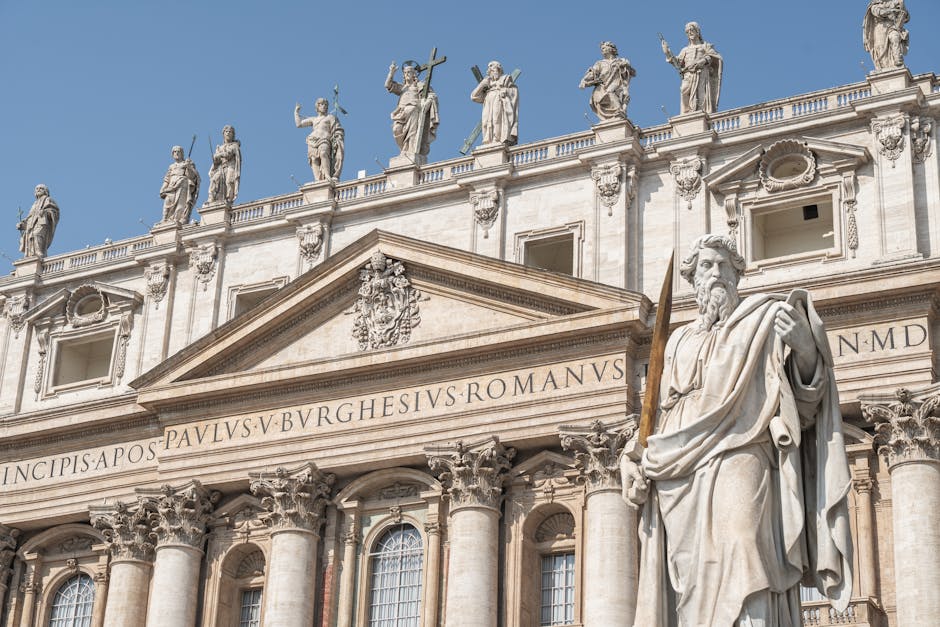
February 24 marks a somber anniversary—four years since the beginning of the war in Ukraine. After leading the midday Angelus at St. Peter's Square, Pope Leo XIV delivered an impassioned plea for peace, declaring that "peace cannot be postponed" as the world witnesses the ongoing tragedy that has consumed Eastern Europe.

His Holiness's words carry particular weight as the Vatican continues its diplomatic efforts to broker dialogue between conflicting parties, while maintaining its consistent teaching that war is always a failure of humanity's ability to resolve differences through peaceful means.
The Pope's Consistent Message
From the outbreak of hostilities, Pope Leo has maintained an unwavering commitment to peace while acknowledging the complexity of the situation. In his Angelus address, the Holy Father emphasized: "Four years have passed since the beginning of this war, and my heartfelt thoughts remain focused on the tragic situation unfolding before the eyes of the whole world."
The Pope's approach has been characterized by what Vatican observers call "moral clarity without political partisanship"—consistently condemning aggression while calling all parties to dialogue and reconciliation.
"War is always a defeat for humanity. How much suffering, how much destruction, how much pain!" - Pope Leo XIV
The Church's Teaching on War and Peace
The Catholic Church's position on war draws from centuries of moral theology, particularly the doctrine of "just war" as developed by St. Augustine and refined by St. Thomas Aquinas. However, in the modern era, papal teaching has increasingly emphasized that military solutions rarely achieve lasting peace.
As stated in the Catechism of the Catholic Church: "All citizens and all governments are obliged to work for the avoidance of war. However, 'as long as the danger of war persists and there is no international authority with the necessary competence and power, governments cannot be denied the right of lawful self-defense.'"
The Criteria for Just Defense
The Church recognizes that nations have a right to self-defense when certain strict conditions are met:
- The damage inflicted by the aggressor must be lasting, grave, and certain
- All other means of putting an end to the conflict must have been shown to be impractical or ineffective
- There must be serious prospects of success
- The use of arms must not produce evils graver than the evil to be eliminated
The Vatican's Diplomatic Efforts
Throughout the conflict, the Vatican has pursued quiet diplomacy, with Cardinal Pietro Parolin, the Secretary of State, leading efforts to maintain dialogue channels. The Holy See's approach has been to position itself as a potential mediator, offering its services to facilitate negotiations when both parties are ready.
Vatican spokesman Matteo Bruni has repeatedly emphasized that "the Holy Father is ready to do everything possible to put himself at the service of peace, but peace requires the will of all parties involved."
The Human Cost That Moves the Pope
Pope Leo's appeals for peace are deeply rooted in his pastoral concern for human suffering. In his various addresses, he has consistently highlighted:
Civilian Casualties: "Every life lost is a tragedy that cries out to heaven," the Pope has said, particularly mourning the deaths of children and innocent civilians.
Refugee Crisis: The displacement of millions of Ukrainians has particularly moved the Holy Father, who has called on all nations to welcome those fleeing violence with open arms.
Moral Injury: Beyond physical destruction, the Pope has spoken about the spiritual and psychological wounds that war inflicts on both victims and perpetrators.
The Power of Prayer and Fasting
Throughout the conflict, Pope Leo has called for special days of prayer and fasting for peace. He has consistently emphasized that spiritual action is not passive action, but rather the most powerful force available to believers.
"Prayer changes the heart, and a changed heart can change the world," the Pope reminded the faithful during a special prayer service for Ukraine.
The Holy Father has also encouraged Marian devotion, noting that the Blessed Virgin Mary is the "Queen of Peace" and intercedes for all nations in conflict.
Looking Toward Resolution
As the war enters its fifth year, Pope Leo's message remains consistent: peace is possible, but it requires courage from leaders and the active participation of the international community. The Holy Father has outlined several principles for sustainable peace:
Respect for International Law: All nations must recommit to the principles enshrined in international treaties and agreements.
Protection of Sovereignty: The territorial integrity of nations must be respected and protected.
Dialogue Over Force: Military solutions must give way to diplomatic negotiations, no matter how difficult or complex.
Justice and Reconciliation: True peace requires not just the cessation of hostilities, but also accountability for war crimes and a commitment to preventing future conflicts.
A Call to the Faithful
Pope Leo's message extends beyond political leaders to every Catholic and person of good will. He has called for:
- Daily prayer for peace and for all those affected by war
- Generous support for humanitarian aid organizations
- Advocacy with political leaders for peaceful solutions
- Rejection of hatred and the language of vengeance
- Commitment to building a culture of peace in local communities
Hope in the Midst of Darkness
Despite the grim milestone of four years of conflict, Pope Leo maintains that peace is not only possible but inevitable for those who trust in God's providence. "The light of Christ shines even in the darkest moments of human history," he has said.
As Christians around the world continue to pray for Ukraine and for peace throughout the world, the Pope's words serve as both a challenge and a source of hope: "Peace cannot be postponed, because every day that passes means more suffering for our brothers and sisters."
In the end, Pope Leo's response to the Ukraine war reflects the Church's fundamental conviction that peace is not merely the absence of conflict, but the presence of justice, mercy, and love—the very values at the heart of the Gospel message.


Comentarios