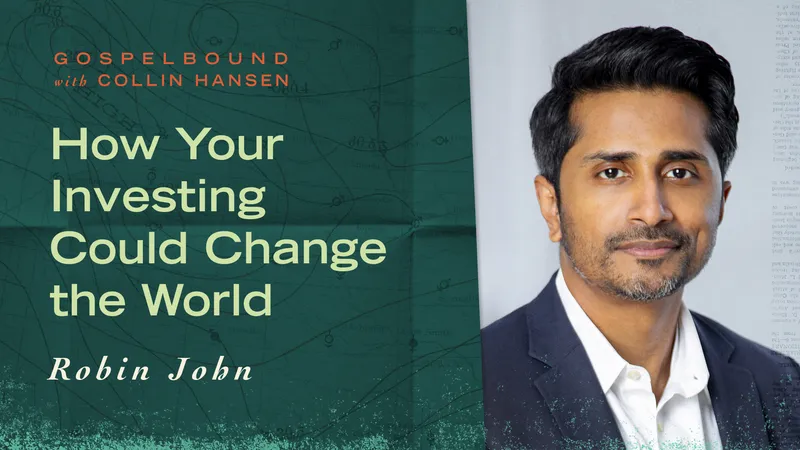
"Do any of us really want to be in the position where our retirement account grows in sync with the cancer ward?" This provocative question from Robin John, CEO of Eventide Asset Management, cuts to the heart of Christian investing.
Most believers would instinctively answer "no"—yet many unknowingly hold mutual funds that invest in tobacco companies, gambling enterprises, or other industries that profit from human suffering. The disconnect isn't malicious; it's simply invisible.
"Our world can be a much better place if investors will learn to prioritize what really matters now and in eternity."
Biblical Foundations for Investment
Luke 19:11-27 tells the parable of the ten minas, where faithful stewards are commended for multiplying their master's resources. Matthew 25:14-30 echoes this theme in the parable of the talents. God expects us to be wise stewards, not just of our income, but of our accumulated wealth.
Yet stewardship involves more than returns. 1 Corinthians 10:31 declares: "Whether you eat or drink, or whatever you do, do all to the glory of God." This "whatever you do" includes how we invest our money.
The Problem with Passive Investing
Traditional investing often operates on moral autopilot. We buy index funds or mutual funds without examining what companies we're actually supporting. This passive approach can inadvertently make us complicit in industries that undermine human flourishing.
Ephesians 5:11 instructs us to "take no part in the unfruitful works of darkness, but instead expose them." While this verse primarily addresses personal conduct, its principle extends to financial participation in enterprises that perpetuate darkness.
Common Problematic Holdings
Many standard portfolios include investments in:
• Tobacco companies (despite causing 100 million deaths in the past century)
• Gambling enterprises that exploit addiction
• Adult entertainment industries
• Companies with poor labor practices
• Businesses that harm environmental stewardship
Beyond ESG: A Christian Approach
Environmental, Social, and Governance (ESG) investing has gained popularity, but it often reflects secular values that may conflict with Christian convictions. For example, ESG frameworks might penalize companies for traditional marriage policies while rewarding those that promote secular social agendas.
Christian investing requires a biblical worldview, not just trendy social consciousness. Romans 12:2 warns against being "conformed to this world" but instead being "transformed by the renewal of your mind."
Positive Screening vs. Negative Screening
Many faith-based investment approaches use negative screening—avoiding bad companies. But Christian investing can go further through positive screening—actively seeking companies that contribute to human flourishing.
Philippians 4:8 provides a framework: "Whatever is true, whatever is honorable, whatever is just, whatever is pure, whatever is lovely, whatever is commendable, if there is any excellence, if there is anything worthy of praise, think about these things."
Companies Worth Supporting
Consider investing in businesses that:
• Develop life-saving medicines and medical technologies
• Improve access to clean water and sanitation
• Advance education and literacy
• Support fair labor practices
• Practice environmental stewardship
• Strengthen families and communities
The Common Good Principle
1 Corinthians 10:24 teaches: "Let no one seek his own good, but the good of his neighbor." This principle transforms investing from mere wealth accumulation into neighbor love expressed through capital allocation.
When we invest in companies that create "compelling value for the common good," we participate in God's work of making all things new (Revelation 21:5). Our money becomes a tool for human flourishing, not just personal enrichment.
Addressing Practical Concerns
"Will I Sacrifice Returns?"
This question reveals our true priorities. Matthew 6:19-21 warns against storing up treasures on earth while encouraging investment in eternal values. However, many values-based funds demonstrate competitive returns, proving that doing good and doing well often align.
"How Do I Start?"
Begin by examining your current holdings. Ask your financial advisor about the underlying companies in your mutual funds. Research faith-based investment options that align with your convictions. Consider both individual stocks and specialized funds that practice biblical stewardship.
Discernment in Gray Areas
Not every investment decision is black and white. Romans 14:5 acknowledges that "each one should be fully convinced in his own mind." Some Christians may feel comfortable owning stock in companies with mixed practices, while others prefer stricter standards.
Key questions for discernment:
• What is the company's primary business?
• Do their practices align with biblical values?
• Are they contributing to human flourishing or detriment?
• Can I enthusiastically "root for" their success?
The Eternal Perspective
1 Timothy 6:17-19 instructs the wealthy to "do good, to be rich in good works, to be generous and ready to share, thus storing up treasure for themselves as a good foundation for the future, so that they may take hold of that which is truly life."
Christian investing isn't ultimately about maximizing returns but about participating in God's kingdom work through wise stewardship. It's about using our financial resources to support businesses that reflect God's heart for justice, mercy, and human dignity.
A Legacy of Faithfulness
When we stand before Christ, what will matter isn't just how much wealth we accumulated, but how we accumulated it and what we supported along the way. Matthew 25:21 records the Master's commendation: "Well done, good and faithful servant."
"Christianity works because it connects us with reality that is true beyond us."
Our investment choices are opportunities to live out this reality—using earthly resources for eternal purposes, loving our neighbors through capital allocation, and participating in God's mission to restore all things.
The question isn't whether we can afford to invest according to our values, but whether we can afford not to. Our money will support something—let it support what honors God and serves human flourishing.




Comentarios