
Baptism stands as Christianity's foundational sacrament, marking the believer's entry into the community of faith and symbolizing the spiritual transformation that occurs through faith in Christ. From the earliest days of the church, Christians have practiced baptism in obedience to Jesus' command and as a powerful expression of the Gospel's transformative power.
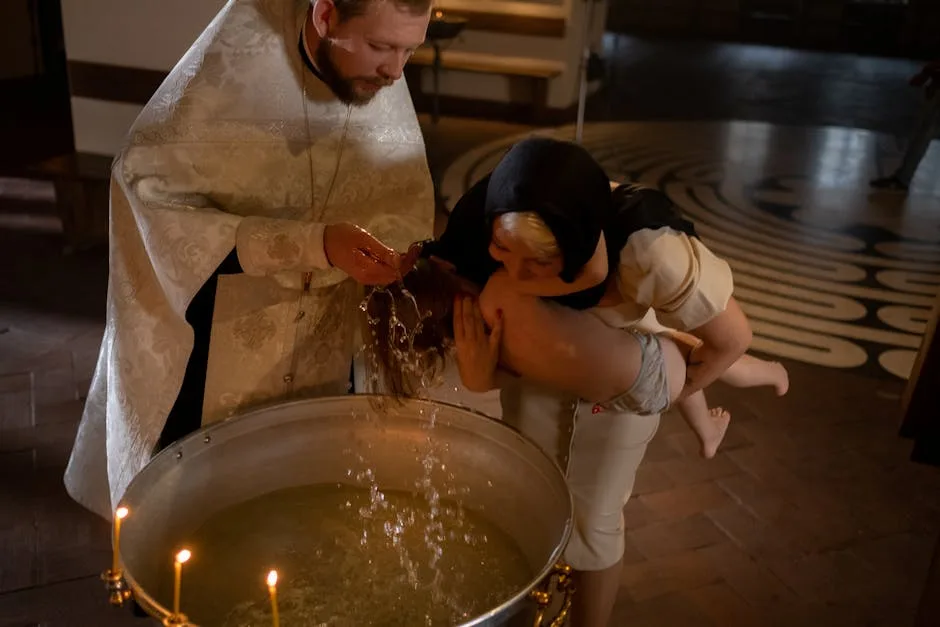
Pope Leo XIV teaches that "baptism is not merely an outward ritual but the visible sign of invisible grace, marking the beginning of a lifelong journey of discipleship and transformation in Christ."
Biblical Foundation
Jesus' own baptism by John provides the model for Christian practice, though Christian baptism differs significantly from John's baptism of repentance. Christ's final commission establishes baptism as essential to Christian mission: "Therefore go and make disciples of all nations, baptizing them in the name of the Father and of the Son and of the Holy Spirit" (Matthew 28:19).
This trinitarian formula distinguishes Christian baptism from other ritual washings and connects it to the full revelation of God's nature.
Apostolic Practice
The book of Acts records numerous baptisms following Gospel proclamation, demonstrating its centrality in early Christian practice. Peter's Pentecost sermon concludes with the call: "Repent and be baptized, every one of you, in the name of Jesus Christ for the forgiveness of your sins" (Acts 2:38).
Symbolism and Meaning
Baptism is rich in symbolic significance that reflects core Gospel truths: Death and resurrection with Christ (Romans 6:3-4). Washing from sin and spiritual cleansing (Acts 22:16). New birth and spiritual regeneration (John 3:5). Union with Christ and incorporation into his body (1 Corinthians 12:13). Putting on Christ like a new garment (Galatians 3:27).
Each image illuminates different aspects of the salvation experience.
Burial and Resurrection
Paul's teaching about baptism as burial with Christ emphasizes the radical nature of conversion—the old self dies and a new self emerges. This is not merely moral improvement but spiritual transformation.
Historical Development
Early Christian practice evolved to include: Preparation periods for instruction (catechesis). Profession of faith and renunciation of evil. Immersion in water in the name of the Trinity. Post-baptismal anointing and first communion. Integration into the Christian community.
These elements emphasized baptism's significance and prepared candidates for faithful Christian living.
Infant vs. Adult Baptism
By the fourth century, infant baptism became common as Christianity became culturally dominant. The Reformation sparked renewed debate about proper baptismal subjects, with some arguing for believers' baptism and others defending infant practice.
Modes of Baptism
Christian traditions practice different modes of baptism: Immersion involves complete submersion in water. Affusion involves pouring water over the candidate. Aspersion involves sprinkling water on the candidate.
While immersion most clearly symbolizes death and resurrection, the essential elements are water and the trinitarian formula.
The Significance of Water
Water symbolism throughout Scripture provides rich background for baptismal meaning—cleansing from defilement, life-giving refreshment, and passage from one state to another (as in crossing the Red Sea).
Infant Baptism: Arguments and Issues
Churches practicing infant baptism argue: Baptism parallels circumcision as a covenant sign. God's grace operates apart from human understanding. Christian families have always included children. The New Testament includes household baptisms that likely included infants.
This practice emphasizes salvation's objective reality and God's initiative in grace.
Confirmation and Catechesis
Churches baptizing infants typically provide later opportunities for personal faith confirmation and intensive Christian instruction, ensuring that baptismal grace is appropriated through personal commitment.
Believers' Baptism: Arguments and Practice
Churches practicing believers' baptism argue: The New Testament pattern shows faith preceding baptism. Personal faith and repentance are prerequisites for meaningful baptism. The symbolism requires conscious participation in Christ's death and resurrection. Infant baptism lacks biblical precedent and personal commitment.
This practice emphasizes conversion's subjective reality and individual faith decision.
Age of Accountability
Believers' baptism churches face questions about when children are ready for baptism, balancing the importance of personal faith with recognition of childhood's developmental aspects.
Baptism and Salvation
Christian traditions differ on baptism's relationship to salvation: Catholic and Orthodox traditions teach that baptism actually confers grace and remits sin. Lutheran teaching emphasizes baptism as means of grace that creates faith. Reformed traditions see baptism as sign and seal of covenant grace. Baptist traditions emphasize baptism as symbol of previously received salvation.
All agree that baptism is important, though they differ on its precise role.
Faith and Sacrament
Even traditions emphasizing baptism's sacramental efficacy recognize that faith must accompany or follow the sacrament for its full benefits to be realized.
The Role of the Church
Baptism is inherently communal—it marks entry into the Christian community and implies commitment to participation in church life. The congregation witnesses baptism and commits to nurture the baptized person.
This communal dimension prevents baptism from becoming merely private spiritual experience.
Baptismal Vows and Promises
Many traditions include vows or promises made by candidates (or parents in infant baptism) that articulate the commitments involved in Christian discipleship.
Living Out Baptism
Baptism begins rather than completes the Christian journey. Paul frequently appeals to baptism as motivation for holy living: "Count yourselves dead to sin but alive to God in Christ Jesus" (Romans 6:11). The baptized person is called to live out the reality symbolized in the sacrament.
This includes ongoing repentance, spiritual growth, and service to others.
Daily Baptismal Living
Luther taught that Christians should daily remember their baptism, using it as assurance of forgiveness and motivation for faithful living. Each day involves dying to sin and rising to new life.
Ecumenical Convergence
Despite differences in practice, most Christian churches recognize each other's baptisms when performed with water in the name of the Trinity. This mutual recognition reflects shared understanding of baptism's essential meaning.
Ecumenical dialogue continues to seek greater unity while respecting legitimate diversity in practice.
One Baptism
The principle of "one baptism" (Ephesians 4:5) means that valid baptism need not be repeated, even when someone changes denominational affiliation.
Pastoral Considerations
Pastors face various baptismal challenges: Preparing candidates for meaningful participation. Explaining baptism's significance to congregations. Deciding when children are ready for believers' baptism. Addressing requests for rebaptism. Handling baptism in interfaith marriages or nominal faith situations.
These require wisdom, biblical knowledge, and pastoral sensitivity.
Contemporary Issues
Modern baptismal practice raises new questions: Environmental concerns about water usage and location. Inclusion of persons with disabilities. Technology's role in baptismal services and instruction. Cultural sensitivity in cross-cultural mission contexts.
The church must adapt practices while preserving essential meanings.
Conclusion: Beginning the Journey
Baptism marks the beginning of Christian discipleship, not its completion. Whether practiced in infancy or adulthood, by immersion or pouring, baptism signifies the radical transformation that God accomplishes through faith in Christ.
As we live out our baptismal calling, we grow into the full stature of Christ, serving others and bearing witness to the Gospel that has transformed our lives. Our baptism reminds us daily that we belong to Christ and are called to reflect his love in all we do.

Comentarios