
I am once again grateful to Boyce College for sponsoring the blog this week. Their goal is to prepare students for Maximum Faithfulness in every aspect of life.

Today’s Kindle deals include several good options, including Daniel Darling’s newest book (which, as it happens, is referenced below).
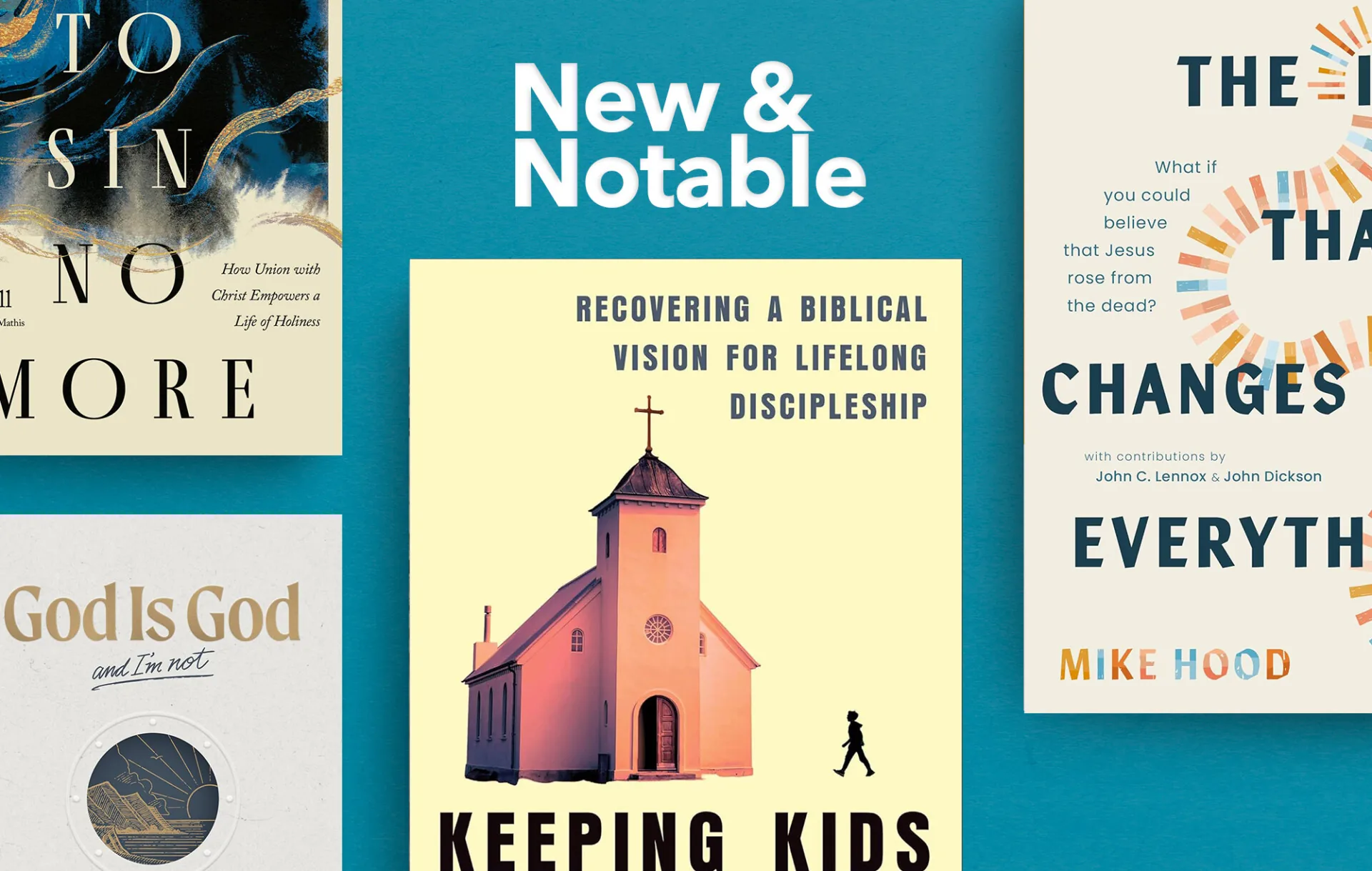
(Yesterday on the blog: New and Notable Christian Books for February 2026)
How Marriage Actually Refers to Christ and the Church
We all know that in some way, marriage refers to Christ and the church. But have we thought deeply about what that really means? Chase Krug offers a compelling explanation at Mere Orthodoxy. “If spouses fail to practice headship and submission, does their marriage no longer ‘refer to Christ and the church’? What about terrible Christian marriages or even non-Christian marriages? Are they profound mysteries?Whose marriage refers to Christ and the church?”
When Stories Move Us: Does It Matter if They’re True?
Michael Jensen considers whether the truth matters when we tell stories about our lives. “Modern writers – and readers – are increasingly willing to detach a story’s meaning from whether it happened. Christianity is not willing to do this and cannot survive if we try.”
To Cover an Offense Is to Forgive
Tom helpfully pries apart two related terms: Covering an offense and overlooking an offense.
A Desire Is Not Always a Sinful Desire
Ed Welch reminds us that not all desires are sinful (though I suppose it is true that any desire has the potential to become sinful). “The Bible certainly has its warnings about misplaced and unleashed desires, but Scripture attests that to be human is to have desire. Fears identify those things that are important to you.”
Should Christians Feel Guilty for Being Patriotic?
With all the talk about nationalism, it could be easy to think that it is wrong to be patriotic. Sean Demars corrects on that notion through this review of a new book by Daniel Darling.
What Is the Biblical Way of Progress?
Glen Scrivener: “You’ve probably heard somebody say ‘Get with the times,’ ‘That was the Dark Ages,’ ‘They need to update their thinking,’ or ‘Those people are on the wrong side of history.’ The progress story is so powerful nowadays that people try to win moral arguments by simply stating the date: ‘How can anyone believe that in 2026?’ In this way, even the most secular people believe in progress religiously. And we say religiously not just because of the force of this belief but because of its source: Progress is a biblical idea.”
Flashback: Learning Lessons From Scandals Close to Home
Aging can certainly be humbling and discouraging, so a man who is wise will consider how he can face and endure it with grace—and not seek out or succumb to flattery.
Never do the flowers of grace grow more, than after a shower of repentant tears.
—Thomas Watson
Download
Share
See AlsoA La Carte (February 24)A La Carte (February 11)A La Carte (February 27)


Kommentare